Pure indulgence
At the 5-star superior Hotel Schloss Seefels, the perfect breakfast egg is a true Carinthian original.
At Hotel Schloss Seefels, regionality and sustainability are at the heart of everything – from the architecture and energy use to the food. Chef Richard Hessl sources 80% of the ingredients from within a 70-kilometre radius. This philosophy supports the region while ensuring that Seefels guests enjoy dishes made with ingredients of exceptional freshness, quality, ripeness and flavour.
Carinthian Quality and Freshness in Every Egg
Eggs are an important staple food, rich in high-quality protein, vitamins and minerals. But not all eggs are created equal. The majority of eggs consumed and processed today come from industrial production.
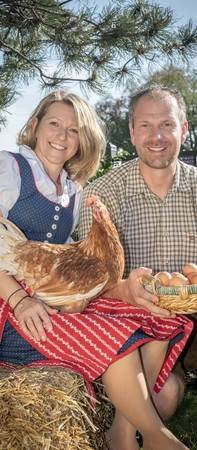
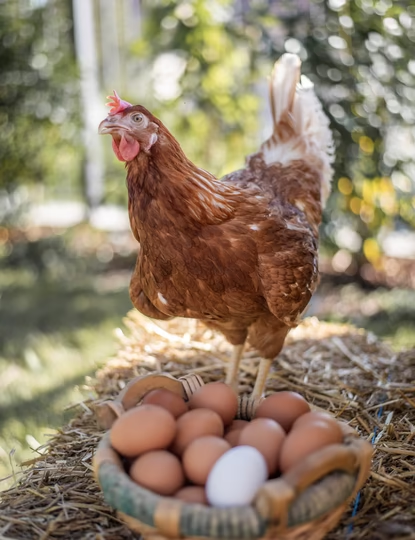
Not so at Schloss Seefels. From breakfast eggs and eggs in a glass to poached eggs and classic dishes such as Eggs Benedict and Eggs Royale, more than 1.000 eggs are used in the Seefels kitchen every week. The eggs served to Seefels guests come from Krenn Farm at Magdalensberg in Carinthia – a picture-perfect family-run farm.
The Simple Philosophy of the Krenn Family Egg Farm
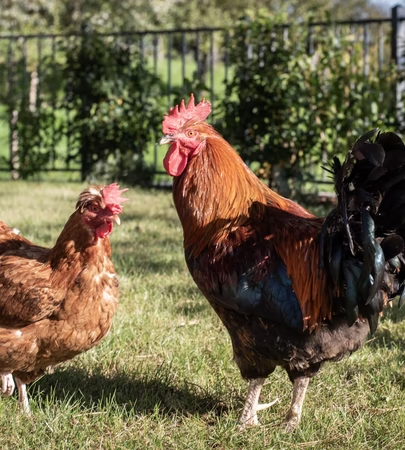
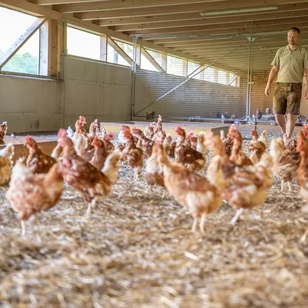
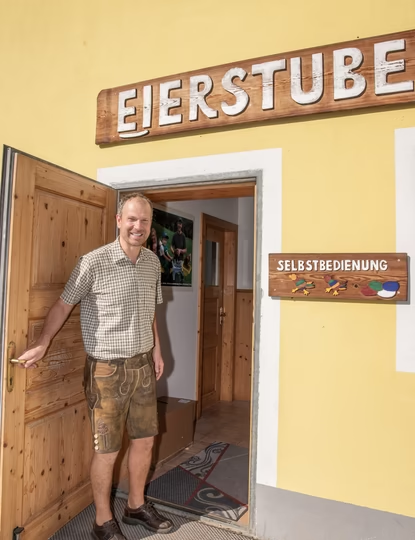
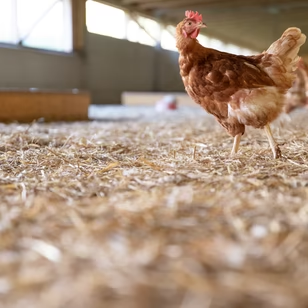
Since 1963, the Krenn family has run their egg farm with dedication and a strong commitment to quality and sustainability. Four generations live and work on the farm, providing more than 8.000 hens with attentive, loving care and a good life.
“Our philosophy is very simple,” says the Krenn family: “We believe in quality, regionality and treating nature with respect. Our hens are more than just animals; they are part of our family. This connection is reflected in every egg we produce. It’s not just about selling eggs. It’s about sharing a piece of our farm and our heritage with every customer.”
-
-
Eierhof Krenn
We spoke to Herwig Krenn, second generation head of the family business, about this inspiring philosophy:
mehr erfahren
Interview with Herwig Krenn
Schloss Seefels: Why did you decide to pursue sustainable egg production?
Herwig Krenn jun.: Because demand for free-range and organic eggs among our customers, who mainly come from the hotel industry and private households, is constantly growing. That is also why we will be taking the step towards free-range farming in autumn. It will be a major project. We are building a wooden bridge over the municipal road so that the chickens can cross the bridge and reach the meadow. With this wooden bridge, we are sure to attract attention in the regional and specialist media.
Schloss Seefels: You work in a natural cycle. What does that mean when it comes to keeping chickens?
Herwig Krenn jun.: We are probably the only farm in Carinthia that produces all of its own feed. We spread the chicken manure on our fields using our own compost spreader, where we grow grain, corn, sunflowers and soybeans – everything we feed to the chickens. We have eight silos, from which we take the feed fresh every day, grind it and mix it.
Schloss Seefels: Your chickens get a daily “Running Sushi”. What exactly does that mean?
Herwig Krenn jun.: Yes, just like at a “Running Sushi” restaurant, the feed is served on a feeding circuit with corn, wheat and soybeans from our own cultivation. What makes it special is the whole-grain feeding. The corn is not dried in autumn; instead, it is stored in an airtight silo. This preserves the valuable nutrients and minerals. The corn still contains a lot of vitamin A, which gives our eggs their beautiful orange-coloured yolk.
Schloss Seefels: Can you tell from the taste of an egg what the chicken has been fed?
Herwig Krenn jun.: I think so. When we travel with our children, they hardly ever want to eat a breakfast egg anywhere else because the difference is so noticeable.
Schloss Seefels: What is your favourite egg dish?
Herwig Krenn jun.: I actually like a soft-boiled egg best, when the yolk is still really soft and runny. For a regular-sized egg, that is usually the case after 5 minutes of cooking. The important thing is to put the egg into simmering water.
Schloss Seefels: Thank you for the conversation, and we wish you continued joy with your more than 8,000 clucking family members, as you so affectionately call your chickens.
FAQs
How can you tell if an egg comes from free-range farming?
A free-range egg can be identified by the number 1 printed on the stamp.
What animal welfare requirements apply?
The animal welfare requirements are always the same, regardless of the number of chickens on the farm – whether there are 100, 1,000 or 10,000 chickens. A maximum of 5 to 6 chickens per square metre is permitted in the henhouse. The outdoor area, including shrubs and vegetation, must provide at least 4 square metres per chicken, and 8 square metres per chicken for organic farming.
How long does an egg keep?
A raw egg can be kept in the refrigerator for 4 to 6 weeks from the date it was laid.
